
Desiccant Caps & Vials
Tamper Evident Style
Desiccant caps and closures custom designed and standard caps and vials offer an innovative desiccant to keep bottle contents fresh and dry. If you package your product in a bottle, and it requires protection from moisture damage or odors, you can speed up your packaging line and save space by using desiccant caps and closures.
Desiccant caps and closures have several distinct advantages for your packaging:
- Saves space and speeds packaging time
- Ingestion proof; no desiccant cartridge to lose
- Dust-free desiccant barrier prevents contamination of your product
- Optional translucent cap allows use of indicating desiccants
- Activated carbon available for odor control
- Unique vapor seal keeps out moisture
- Available in press fit style, and available complete with bottle
- Ample desiccant charge for long life
- Controlled porosity of barrier prolongs desiccant life
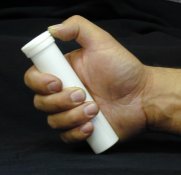
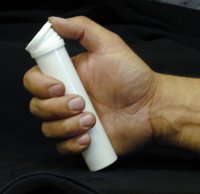
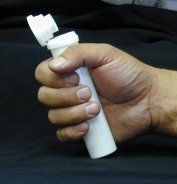
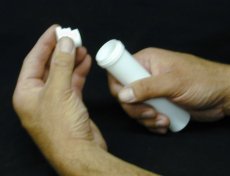
Currently IMPAK Corporation has two none-proprietary molds that are not the property of a specific customer.
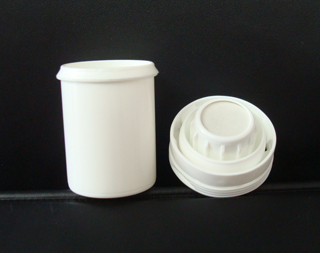
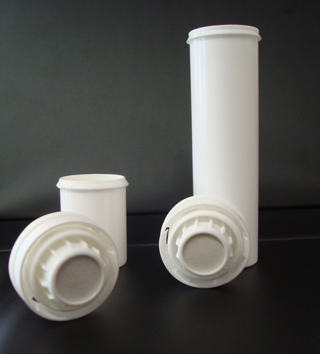
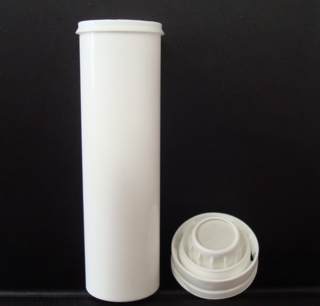
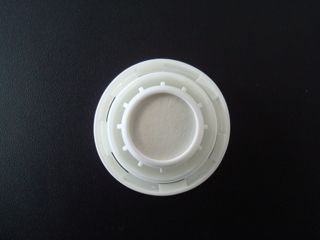
It is important to bear in mind that the polypropylene tamper evident closure has a height of 19 mm. Thus, the 39mm tall vial (pictured at left) has a usable internal volume of less than 20 mm.Our standard cap contains 2.0 grams of silica gel, but can be custom produced with a wide range of sorbents including molecular sieve, activated carbon, and activated clay.
Interested in Learning More?
Use this desiccant calculator to determine the quantity of desiccant you need. Please note: IMPAK recommends this as a starting point, not as a replacement for speaking with one of our trained specialists.
By comparing the properties and capabilities of each desiccant product, it is possible for you to identify the correct desiccant for your needs and make a clear choice. Use the description and chart on this page to compare desiccants such as molecular sieve, silica, and montmorillonite clay.
When dealing with moisture problems in packaging, a wide array of variables can make it difficult or confusing to develop solutions. These variables can be classified into two main groups:
1 - those pertaining to the product, its package, and the environment
2 - the physical and chemical properties of commercially available desiccants